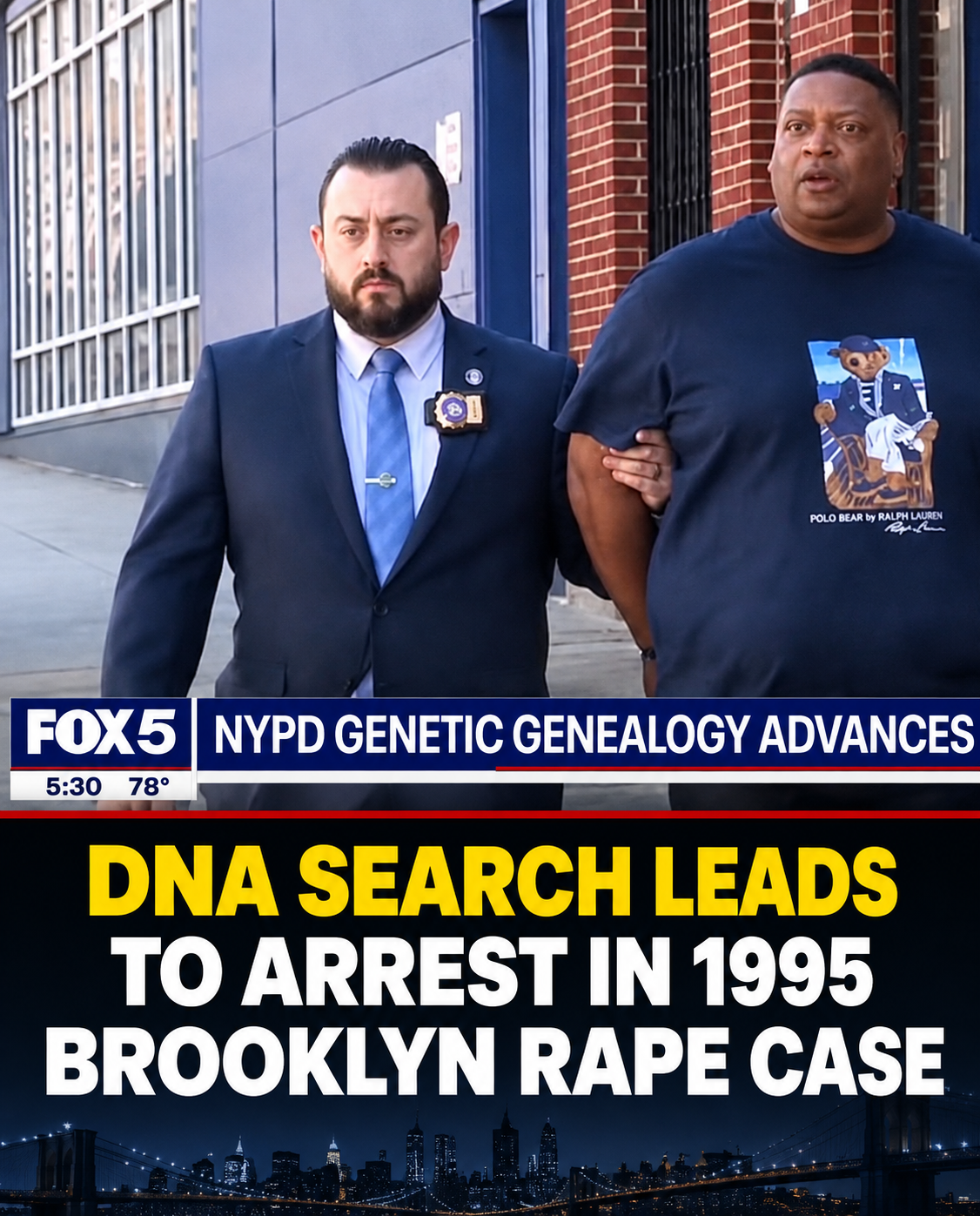
A 1995 Brooklyn Rape Case Was Reopened by DNA — And a Family Connection Helped Lead Investigators to a Suspect
A case that had remained unsolved for more than 30 years has taken a major turn in Brooklyn after investigators used advances in DNA technology to identify a man prosecutors say was connected to a 1995 rooftop attack.
The Case Began in 1995
According to the Brooklyn District Attorney’s Office, a 36-year-old woman entered her mother’s apartment building in Bedford-Stuyvesant on August 2, 1995.
An unknown man allegedly approached her, threatened her with a firearm and took her to the building’s rooftop, where prosecutors say he sexually assaulted and robbed her.
The victim reported the attack immediately, and a rape kit was collected at Brooklyn Hospital. Investigators were able to develop a male DNA profile, but there was no match in the available database at the time.
The Case Stayed Open for Decades
In 2005, prosecutors obtained a John Doe indictment based on the DNA profile before the applicable statute of limitations expired.
But the identity of the person connected to the DNA remained unknown for another two decades.
Then advances in familial DNA technology gave investigators a new lead.
According to prosecutors, genetic links pointed detectives toward William Stephens, 54, of the Bronx. Investigators also discovered that Stephens’ mother and other relatives had lived in the same apartment building where the 1995 attack allegedly occurred.
A DNA Sample Finally Confirmed the Match
Investigators eventually obtained what authorities describe as an abandoned DNA sample from Stephens.
The Brooklyn District Attorney’s Office says that sample matched the DNA recovered from the 1995 rape kit.
Stephens was subsequently charged with first-degree rape, first-degree sexual abuse, robbery and second-degree assault.
He was ordered held on $250,000 bail and is scheduled to return to court on October 30, 2026. Prosecutors say he faces a maximum sentence of 25 years on the top charge if convicted.
A 30-Year-Old Mystery Takes a New Turn
The case shows how advances in forensic technology can give investigators new possibilities in cases that once appeared impossible to solve.
But Stephens has been charged, not convicted. An indictment is an accusation, and the charges must still be proven in court.
For a case that began in 1995, however, the new DNA evidence has brought investigators back to a mystery that had remained unanswered for more than three decades.