My Family Asked Me to Cover My Sister’s Debt—What Happened Next Changed Everything
My sister owes $500,000,” my mother said, her voice cold enough to freeze the room. “You will pay it… or you are no longer our child.” For a second, I thought my father would stop her. Instead, he looked away. That was when something inside me finally snapped. I stared at them both and whispered, “Then I choose… not to be your child anymore.” But what they didn’t know was, I had one secret that could destroy them first.
“My sister owes $500,000,” my mother said, her voice cold enough to freeze the room. “You will pay it… or you are no longer our child.”
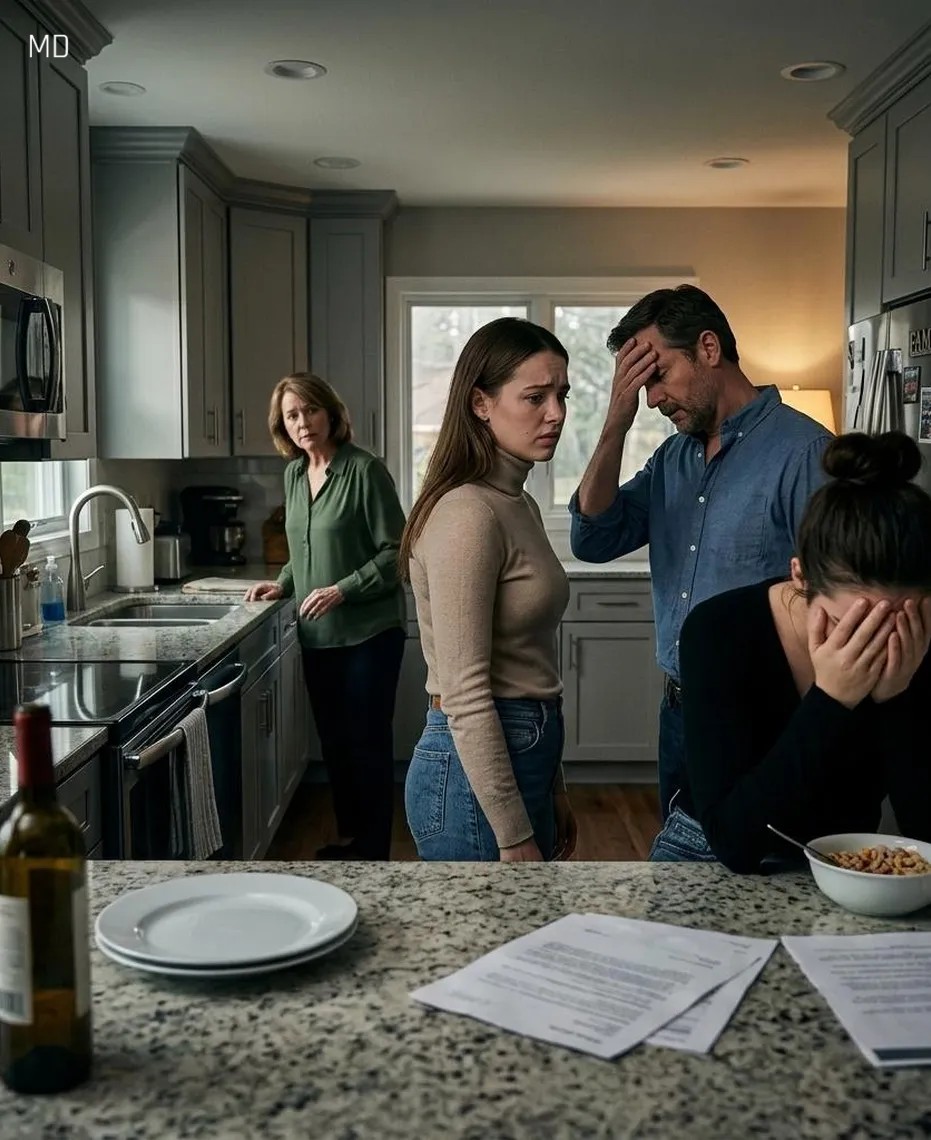
I stood in the middle of my parents’ kitchen, still wearing my work blouse, my laptop bag cutting into my shoulder. I had driven two hours after my mother called, crying so hard I could barely understand her. I thought someone had died. In a way, maybe someone had.
My sister, Brittany, sat at the table with red eyes and perfect nails, twisting a diamond ring around her finger. My father leaned against the counter, arms folded, staring at the floor like the tile had suddenly become fascinating.
“What do you mean she owes half a million dollars?” I asked.
Brittany sniffed. “It was a business investment.”
“It was gambling,” my father muttered.
My mother shot him a look. “Not now, Robert.”
Brittany’s husband had left six months ago. Since then, she had been chasing some fantasy of becoming a luxury event planner, borrowing money from private lenders, maxing out credit cards, and, apparently, using my parents’ house as collateral without fully explaining what she was signing.
I looked at my mother. “Why are you telling me this?”
“Because you have money,” she said.
“I have savings. For my own house.”
“You’re single,” she said, like that made me less human. “You don’t have children. You don’t have real responsibilities.”
I laughed once, sharp and bitter. “I worked twelve years for that money.”
“And your sister made a mistake,” Mom snapped. “Family fixes mistakes.”
“Then ask Brittany to fix it.”
Brittany started crying harder. “I can’t, Claire. They’ll ruin me.”
I stared at her. “You ruined yourself.”
The room went silent.
My mother stepped closer. “You have always been jealous of her.”
That hit harder than I expected. Because all my life, Brittany got rescued. I got lectures. She crashed cars, quit jobs, missed rent, and somehow I was the selfish one for not clapping while everyone cleaned up after her.
Then my mother said the words I would never forget.
“You will transfer the money by Friday, or you are no longer our daughter.”
For a second, I thought my father would stop her. Instead, he looked away.
Something inside me finally snapped.
I stared at them both and whispered, “Then I choose… not to be your child anymore.”
Then Brittany lifted her head and said, “Wait. What do you mean you already know?”…
My mother’s voice was steady, almost cold, as she told me my sister owed an overwhelming amount of money—and that I was expected to fix it. I stood in the middle of the kitchen, still wearing my work clothes, trying to understand how the conversation had shifted so quickly from concern to demand. My sister sat quietly, avoiding my eyes, while my father stayed silent. When I refused, explaining that my savings were meant for my own future, my mother’s response was sharp: family takes responsibility. In that moment, I realized this wasn’t about helping—it was about sacrifice, and I was the one expected to give everything.
But there was something they didn’t know. Weeks earlier, I had been contacted by a fraud investigator who informed me that someone had used my identity without permission. As I placed documents on the table, the truth began to unfold. Credit lines, loans, and applications had been opened in my name, all without my knowledge. My sister tried to explain it away, but the details spoke for themselves. What had been presented as a mistake was, in reality, a serious breach of trust. The room, once filled with certainty, shifted into confusion and tension.
The situation became even clearer when I revealed additional evidence. My name had been placed on major financial documents without consent, including a guarantee tied to a large debt. Voices were raised, and emotions took over, but beneath it all was a simple truth: trust had been broken. When my mother asked me not to take action because of the consequences my sister might face, I understood something deeply important. The concern was not for what had been done to me, but for protecting what remained of a difficult situation.
I chose to step away and protect my future. With legal guidance, I addressed every unauthorized account and cleared my name. The process was not easy, and the emotional weight lingered long after the paperwork was resolved. Over time, life settled into something quieter, more stable. The experience taught me that setting boundaries is not an act of rejection—it is an act of self-respect. While healing takes time, it also creates space for clarity, strength, and the ability to move forward with confidence, knowing your value does not depend on anyone else’s expectations.