A Single Mom Was Sleeping in Seat 8A—Until the Captain Asked Over the Intercom, “Is There a Fighter Pilot on Board?” PART 1 The passenger jet had been traveling across the Atlantic for almost two hours when the captain’s announcement suddenly brought nearly three hundred passengers to silence. “If there is a fighter pilot on board, please identify yourself to the cabin crew immediately.” Nobody expected the exhausted woman sitting in seat 8A to be the person they urgently needed. The overnight flight from New York to Madrid had begun without any problems. The cabin lights had been dimmed, passengers were settling in for the long journey, and the constant vibration of the engines filled the plane. Some passengers slept beneath thin blankets. Others watched movies quietly with headphones on. A few looked through their windows into the endless darkness outside. In seat 8A sat Laura Vance, thirty-eight years old, wearing a simple green sweater with a blanket over her legs and a closed book resting in her hands. To the people around her, Laura looked completely ordinary. She had politely asked a flight attendant for some water, turned down dinner, and spent most of the flight attempting to sleep. Nothing about her appearance suggested that she had once been among the most highly decorated fighter pilots in the United States Air Force. Years earlier, Laura had flown F-16s on demanding missions where decisions had to be made within seconds. She had been trained to stay composed while alarms blared, systems failed, and people’s lives depended on her decisions. But after a tragedy changed her life forever, Laura left military aviation behind. She didn’t want the responsibility anymore. She didn’t want people addressing her as “Commander.” She didn’t want medals, praise, or anyone treating her like some kind of hero. Above everything else, she wanted a peaceful, ordinary life. That was one reason she had chosen seat 8A. A window seat. Minimal conversation. An overnight flight where she could blend into a crowd of hundreds of strangers. Then the captain made another announcement. “Ladies and gentlemen, this is your captain. We are experiencing a technical situation that requires immediate assistance. If anyone on board has experience flying military fighter aircraft, please notify a member of the cabin crew immediately.” This time, the tension spreading through the cabin was impossible to miss. A woman pulled her infant closer to her chest. An elderly passenger reached across the aisle and held his wife’s hand. Passengers began looking nervously at one another. Why would the crew of a modern passenger aircraft suddenly need someone who had flown a fighter jet? And what exactly was happening behind the locked cockpit door? Laura slowly opened her eyes. There was something in the captain’s voice that most of the passengers probably hadn’t noticed. Controlled urgency. She had heard that tone countless times during her military career. It was the voice pilots used when something was seriously wrong, but allowing panic to take control would only make matters worse. A flight attendant hurried down the aisle, studying each passenger as she moved from row to row. She maintained a professional expression, but Laura could see the fear she was desperately trying to conceal. Whatever was happening was more serious than the announcement made it sound. Laura lowered her eyes. No. That chapter of her life was over. She had promised herself she would never become the person everyone depended on when disaster happened again. Then the flight attendant stopped beside row eight. “Excuse me, ma’am,” she said quietly. “Do you happen to know if anyone sitting near you has military aviation experience? The captain urgently needs someone who has flown fighter aircraft.” Laura looked around. Across the aisle sat a family traveling with two small children. Several rows ahead, an elderly couple sat holding hands. Everywhere she looked were ordinary people thousands of feet above the ocean, completely dependent on the people inside the cockpit. For a moment, Laura remembered the promise she had made after leaving the Air Force. Never again. Never put herself in a situation where someone else’s life could depend on her. But another memory immediately came back to her. Something one of her instructors had told her years before. A pilot never leaves people behind. Laura slowly drew in a breath. “I’m a pilot.” The flight attendant’s expression changed slightly. “I’m sorry?” Laura pushed the blanket away and released her seatbelt. Then she sat upright. Something about her changed immediately. The exhausted passenger disappeared. In her place was the calm, controlled posture of someone who had spent years commanding aircraft traveling at extraordinary speeds. “I’m a former U.S. Air Force fighter pilot,” Laura said. “I flew F-16s for several years.” The passenger sitting beside her turned suddenly. “You?” Whispers began spreading through the nearby rows. Laura paid no attention to them. The flight attendant stared at her for a moment, seemingly caught between disbelief and relief. Then she said, “Please come with me. Right now.” Laura stood. In the strangely silent cabin, the tiny click of her seatbelt releasing sounded almost deafening. Dozens of passengers watched as she followed the flight attendant toward the front of the plane. With every step, Laura felt as though she were moving backward through time, returning to a life she had spent years trying to leave behind. But Laura had no idea that the emergency waiting beyond the cockpit door was about much more than a malfunctioning aircraft. Because the moment she stepped inside, she would come face-to-face with something connected to the tragedy that had ended her flying career years earlier. And even more disturbing… Someone on that plane already knew exactly who Laura Vance was. Part 2 reveals what was really happening inside the cockpit—and why Laura had been on that flight in the first place….

A Single Mom Was Sleeping in Seat 8A—Until the Captain Asked Over the Intercom, “Is There a Fighter Pilot on Board?”
The commercial airliner had been flying above the Atlantic for nearly two hours when the captain’s voice suddenly came through the speakers and silenced almost three hundred passengers.
“If there is anyone aboard with fighter-pilot experience, please identify yourself to a member of the cabin crew immediately.”
People exchanged confused, frightened looks.
No one could understand why a passenger jet traveling from New York to Madrid would suddenly need a military pilot.
And absolutely no one suspected that the quiet woman sleeping beside the window in seat 8A might be the only person on the aircraft capable of helping them survive.
The overnight flight had started normally.
The cabin lights had been lowered, passengers were watching movies or trying to sleep, and the dark Atlantic stretched endlessly beneath the aircraft.
In seat 8A sat thirty-eight-year-old Laura Vance.
She wore an ordinary green sweater with a blanket across her legs and a closed book resting in her hands.
To everyone around her, Laura looked like nothing more than an exhausted traveler hoping to sleep through the flight.
What they didn’t know was that Laura had once been one of the most accomplished fighter pilots in the United States Air Force.
She had flown F-16s through dangerous missions where decisions had to be made in seconds.
But eighteen months earlier, a devastating accident had changed everything.
Laura had left the military.
She no longer wanted medals, recognition, responsibility, or people calling her a hero.
She wanted anonymity.
That was why she had deliberately chosen seat 8A—a quiet window seat where she could disappear among hundreds of strangers.
Then the announcement came again.
“Ladies and gentlemen, this is your captain. We are dealing with a technical situation requiring immediate assistance. Anyone with military fighter-pilot experience should contact a flight attendant now.”
Discover more
Affiliate Marketing Guides
WordPress Theme Sales
Website Analytics Tools
The mood inside the cabin shifted instantly.
Parents pulled their children closer.
Couples reached for one another’s hands.
Passengers began searching the rows as though some hidden pilot might suddenly appear.
Laura slowly opened her eyes.
She recognized the tone in the captain’s voice.
Controlled.
Professional.
But underneath it was fear.
She had heard that tone before during emergencies thousands of feet above the ground.
Discover more
Online Business Coaching
Website Hosting Service
Writing Prompt Subscription
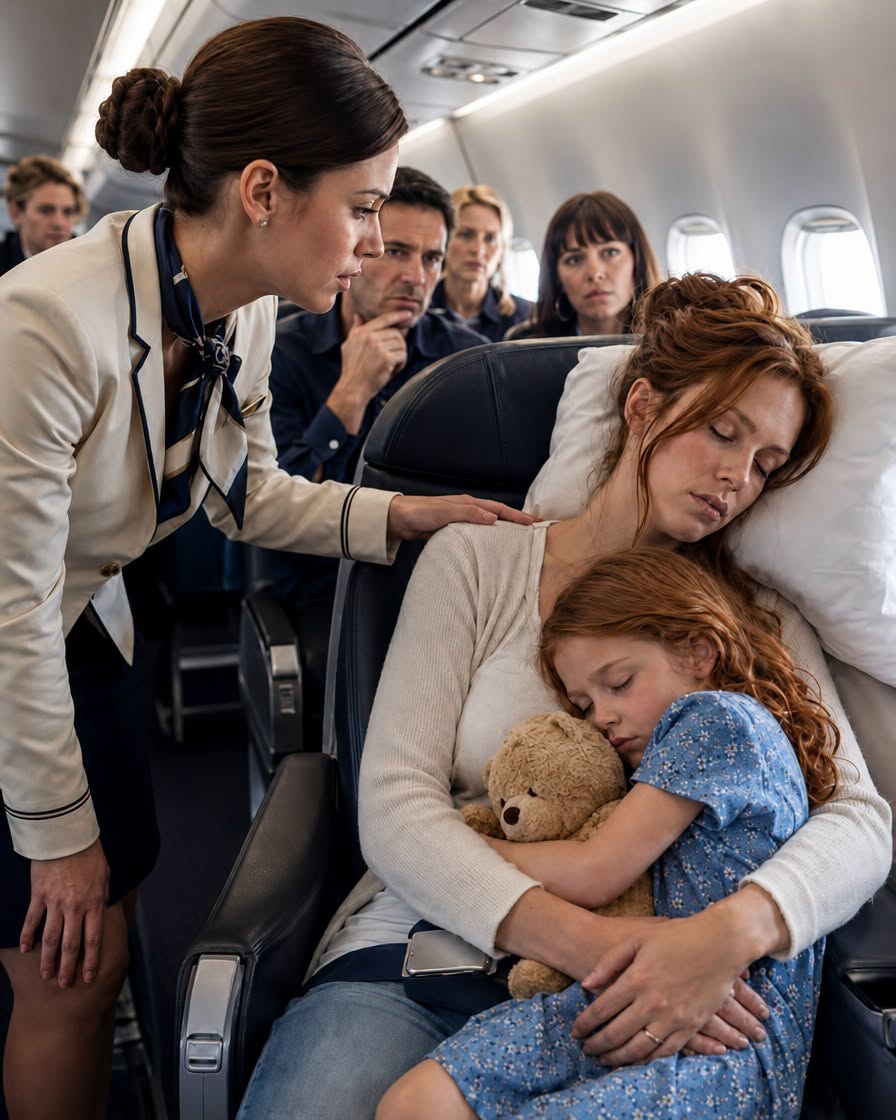
A flight attendant hurried through the aisle, scanning faces.
Laura looked away.
She had promised herself she would never return to that life.
Never again would someone else’s survival depend on her decisions.
Then the flight attendant stopped beside her row.
“Excuse me, ma’am. Do you know if anyone sitting near you has military aviation experience? The captain urgently needs a military pilot.”
Laura glanced around.
She saw frightened families.
Children.
People trapped miles above an ocean with absolutely no control over what was happening.
Discover more
Privacy Policy Template
Blog Design Services
electricity
For a moment, she remembered why she had walked away.
Then another principle from her years of service returned to her.
A pilot never abandons people who need help.
Laura inhaled slowly.
“I’m a pilot.”
The flight attendant stared at her.
“Excuse me?”
Laura removed her seat belt and straightened in her chair.
Her entire demeanor changed.
“I’m a former United States Air Force fighter pilot. I flew F-16s.”
Discover more
Discover Baby Essentials
Website Security Solutions
Blog Monetization Strategies
The passenger beside her blinked in disbelief.
“You?”
Laura gave a small nod.
The flight attendant’s expression shifted instantly from confusion to relief.
“Please come with me.”
Laura stood.
As she walked toward the cockpit, memories she had spent eighteen months trying to bury followed her with every step.
But she had no idea that what waited beyond the cockpit door was connected directly to the tragedy that had destroyed her old life.
PART 2
Discover more
Blogging Ebooks
Digital Marketing Course
Order Fabric Swatches
The cockpit door opened.
Laura immediately smelled overheated electronics, coffee, and tension.
Captain Andrew Vance sat in the left seat, both hands tight around the controls.
Beside him, the first officer was unconscious with an oxygen mask covering his face.
Andrew looked at Laura’s casual clothes.
“You have military flight experience?”
“Yes.”
“What aircraft?”
“F-16 Falcons.”
“When did you last fly?”
Discover more
Social Media Management
Content Marketing Software
Try Marriage Counseling
Laura hesitated.
“About eighteen months ago.”
The captain frowned.
“I need someone current, not someone relying on old experience.”
Before Laura could answer, the entire aircraft suddenly began vibrating.
This wasn’t normal turbulence.
The movement came in a repeated mechanical rhythm.
Laura’s eyes immediately moved toward the flight instruments.
“How long has the control column been doing that?”
“About ten minutes.”
Discover more
Find Winter Coats
Blog Content Creation
Blogosphere Trends Report
“Tell me exactly what happened.”
Andrew pointed toward several warning displays.
“The autopilot disconnected unexpectedly. Then the flight control computer started generating conflicting errors. A few minutes later, my first officer said his arm was going numb and suddenly collapsed.”
Laura looked at the unconscious man.
“Did the two of you eat the same meal?”
“No. He brought coffee from the airport.”
“Anyone else sick?”
“No.”
Laura studied the instruments.
Discover more
adoption
Blog Niche Ideas
Email Marketing Platform
Her uniform was gone.
Her military career was supposedly finished.
But the instincts built during years inside fighter cockpits returned almost immediately.
The aircraft suddenly drifted right.
Andrew pulled against the controls.
“Don’t fight it,” Laura warned.
“I have to stop the bank.”
“No. You’re fighting bad computer input. The system is correcting against you.”
Andrew looked at her.
Laura pointed toward the control system.
“Isolate one of the secondary flight channels.”
For half a second, Andrew hesitated.
Then he trusted her.
He disconnected the channel.
The aircraft gave one violent shudder.
Then the vibration disappeared.
Andrew stared at her.
“You were right.”
Laura didn’t respond.
They still had bigger problems.
A powerful storm covered the radar ahead.
Fuel reserves were shrinking.
Their first officer remained unconscious.
Then a doctor who had volunteered from the passenger cabin appeared at the cockpit entrance.
“Captain, I examined your first officer. I don’t believe this is a normal medical collapse.”
Andrew turned.
“What do you mean?”
“His symptoms are consistent with chemical poisoning.”
Silence filled the cockpit.
Laura immediately looked toward the center console.
Something was missing.
“Where is his coffee thermos?”
The flight attendant looked around.
“It was here.”
Laura’s stomach tightened.
The broken flight-control system.
An incapacitated first officer.
And now evidence disappearing from the cockpit.
Those were no longer random coincidences.
“Lock the cockpit door,” Laura said.
Andrew looked at her.
“You think someone did this intentionally?”
“I think somebody wanted your first officer unable to fly.”
The aircraft began descending toward an emergency airport in northern Spain.
Then another warning appeared.
Hydraulic pressure controlling the right landing gear began dropping.
Almost immediately afterward, the cockpit keypad sounded.
Someone outside was attempting to gain access.
Andrew checked the camera.
“It’s Richard Sterling.”
“Who?”
“Director of Flight Operations for the airline. He’s traveling in first class.”
The lead flight attendant called through the interphone.
“Captain, do not open the door. Mr. Sterling is demanding to enter and says his executive position gives him authority.”
Laura’s expression hardened.
Nothing about the situation felt accidental anymore.
Moments later, the flight attendant called again.
“The doctor found a small plastic cap beneath the first officer’s seat. It looks like it came from a vial.”
Andrew turned toward the windshield.
Through heavy rain, runway lights finally appeared in the distance.
“We land first,” he said.
Laura slid into the unconscious co-pilot’s seat and fastened the harness.
“Agreed. Whatever else is happening can wait until we’re on the ground.”
The airliner descended through intense rain and powerful crosswinds.
Andrew lowered the landing gear.
Two green indicators appeared.
The third did not.
The right main landing gear had not confirmed that it was securely locked.
Andrew’s jaw tightened.
“If that gear folds when we touch down, we could leave the runway.”
Laura placed her hands on the secondary controls.
“I’ll back you up.”
“You’ve never landed this type of airliner.”
“No.”
Laura stared toward the runway.
“But I know how to keep an aircraft straight when systems start failing.”
The jet crossed the runway threshold.
The wheels struck the pavement.
For one terrifying second, the aircraft tilted toward the right.
The questionable landing gear groaned beneath the enormous weight.
Laura immediately compensated with rudder and asymmetric thrust.
Andrew kept the nose aligned.
Then a loud mechanical clunk echoed beneath them.
The landing gear lock finally engaged.
Reverse thrust roared.
The aircraft slowed.
Seconds later, it came to a complete stop.
Behind the cockpit door, nearly three hundred passengers erupted into applause, crying and cheering at once.
Laura remained silent.
She knew the emergency had ended.
But something much darker was about to begin.
PART 3
Spanish police and emergency vehicles surrounded the aircraft immediately after it left the runway.
Passengers were evacuated while authorities detained Richard Sterling before he could disappear into the terminal.
As officers escorted him past the forward section of the airplane, Sterling noticed Laura.
He stopped.
A strange smile appeared on his face.
“Laura Vance,” he said softly. “Of all people, I never imagined you would be sitting in 8A tonight.”
Laura froze.
Captain Andrew stepped beside her.
“You know this man?”
Sterling gave a cold laugh.
“I know quite a lot about her.”
What investigators uncovered during the next forty-eight hours stunned everyone.
Sterling had allegedly been involved in a massive scheme involving falsified maintenance records and counterfeit aircraft components.
Millions of dollars had been diverted through the operation.
But an unexpected audit was approaching, and investigators believed Sterling feared that the entire scheme was about to be exposed.
The emergency aboard the flight had not been random.
The compromised flight systems had been designed to fail.
The first officer had been deliberately incapacitated so Captain Andrew would be left struggling alone during the crisis.
The intention, investigators concluded, was for the aircraft and potentially the evidence surrounding the fraudulent components to disappear in a catastrophic accident.
But there was another discovery.
One that affected Laura personally.
Years earlier, Sterling had worked with a defense contractor responsible for supplying aviation equipment to a military logistics program.
That contractor had supplied defective avionics components to Laura’s former squadron.
And one of those failures had been connected to the accident that killed Laura’s wingman and closest friend, Captain Gabriel Torres.
That accident had destroyed Laura.
For eighteen months, she had believed Gabriel died because she failed him.
She had replayed their final mission endlessly, wondering what command she should have given differently and what maneuver might have saved him.
The guilt became unbearable.
Eventually she resigned from the military and disappeared from aviation completely.
During the new investigation, federal officials recovered classified records related to Gabriel’s final flight.
One investigator handed Laura a transcript containing Gabriel’s last transmission before his aircraft went down.
Laura slowly read the final lines.
Gabriel had told air traffic control that the controls had locked.
Then he had left one final message.
Laura had done everything correctly.
The failure had not been hers.
She stared at the page for a long time.
Then the tears finally came.
For eighteen months, she had been punishing herself for something she could never have prevented.
Gabriel had never blamed her.
Even in his final moments, he had understood the truth.
Weeks later, Laura traveled to Texas.
She stood outside Gabriel’s mother’s home for several minutes before finally knocking.
When the older woman opened the door and saw her, neither spoke.
Then Gabriel’s mother wrapped Laura in her arms.
“I’m sorry,” Laura whispered. “For so long, I believed I left him behind.”
The woman gently held Laura’s hands.
“You never abandoned Gabriel. You carried him with you every single day. But you don’t have to stop living because he died.”
Those words stayed with Laura.
Months passed.
Sterling was eventually convicted on numerous serious federal charges connected to the sabotage and fraud scheme.
Laura, however, made a different decision about her future.
She did not return to military service.
Instead, she accepted a job teaching the next generation of pilots at a commercial aviation academy.
On her first morning as an instructor, she placed her old fighter-pilot helmet on the desk.
A room full of young student pilots immediately became silent.
They expected stories about combat missions and heroic maneuvers.
Instead, Laura walked to the whiteboard and wrote:
THE AIRCRAFT DOESN’T CARE WHO YOU USED TO BE.
She turned toward the students.
“Past accomplishments won’t save you during an emergency. Ego won’t either. What matters is whether you can understand what is happening, make the right decision, and trust the people flying beside you.”
Over time, passengers continued telling the story of the mysterious woman from seat 8A who helped save Flight 412.
Laura never enjoyed being called a hero.
In her mind, she had simply answered when people needed someone capable of stepping forward.
Then one afternoon, a letter arrived at the academy.
It was from a boy who had been sitting several rows away from Laura during that flight.
He wrote that he remembered being terrified after hearing the captain’s announcement.
But as Laura walked toward the cockpit, she had looked at him and calmly nodded.
That tiny gesture convinced him that everything might somehow be okay.
The final sentence made Laura smile.
He was taking his first flying lesson.
Laura folded the letter carefully and placed it in a wooden box beside a photograph of Gabriel.
She finally understood something she had resisted for years.
Pain doesn’t simply disappear.
Neither does loss.
But grief does not have to become a prison.
Later that afternoon, Laura stood beside the airfield as a training jet climbed into the bright blue sky.
For years, the sound of aircraft engines had brought back the worst moment of her life.
This time was different.
She watched the jet disappear into the distance.
For the first time since Gabriel died, Laura didn’t look into the sky and see the past.
She saw everything still waiting ahead of her.
And quietly, with a smile, she whispered,
“I’m home.”